Termite control in Hawthorne, CA covers both of Southern California's big termites. Hawthorne's postwar tract housing, block after block of 1950s and 1960s slab-on-grade stucco homes, sits right on the soil, which is exactly what subterranean termites need: they build mud tubes up from the ground through slab cracks and plumbing penetrations into the framing. Drywood termites, which live entirely inside dry wood with no soil contact, colonize the eaves, trim, and attic framing of the older homes. Because both hide, most homeowners never see them until they find mud tubes, frass pellets, or damage. Call and a local pro can inspect and target the colony.
Signs of termites in a Hawthorne home
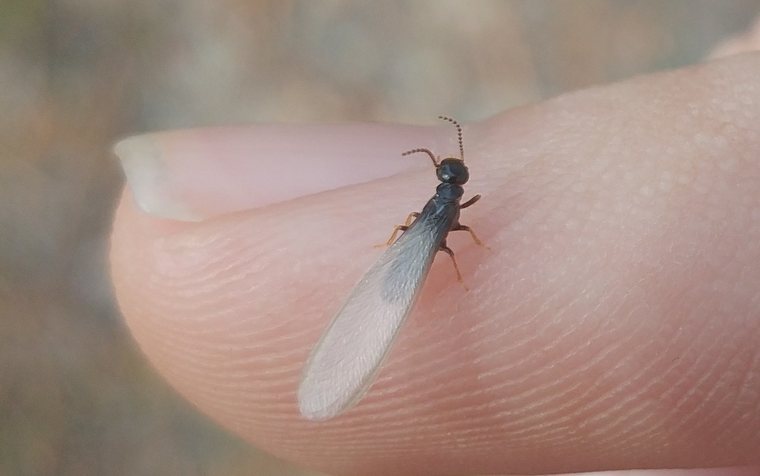
Subterranean termites give themselves away with pencil-width mud tubes running up the foundation, garage slab, or plumbing, and with a spring swarm of dark winged termites. Drywood termites drop frass, tiny six-sided pellets that look like coarse sand, below infested eaves, window trim, and attic wood, and leave small kick-out holes. Blistered or hollow-sounding wood and swarmers near lights point to either.
In Hawthorne's slab homes, the vulnerable spots are the slab edges, plumbing and utility penetrations, the garage, and any wood in contact with soil or softened by a leak.
How termite treatment works
Subterranean termites are treated with a liquid termiticide soil barrier, trenching and treating the soil around the foundation and slab so termites hit a continuous treated zone, plus in-ground bait stations where useful. Drywood termites are treated by extent: localized spot treatment injecting the galleries when confined, or whole-structure fumigation (tenting) when the colonies are widespread.
A local exterminator inspects first, confirms which termite and how far it has spread, and recommends the least-invasive approach that will actually clear it, then flags the moisture and wood-contact issues that invite them back.